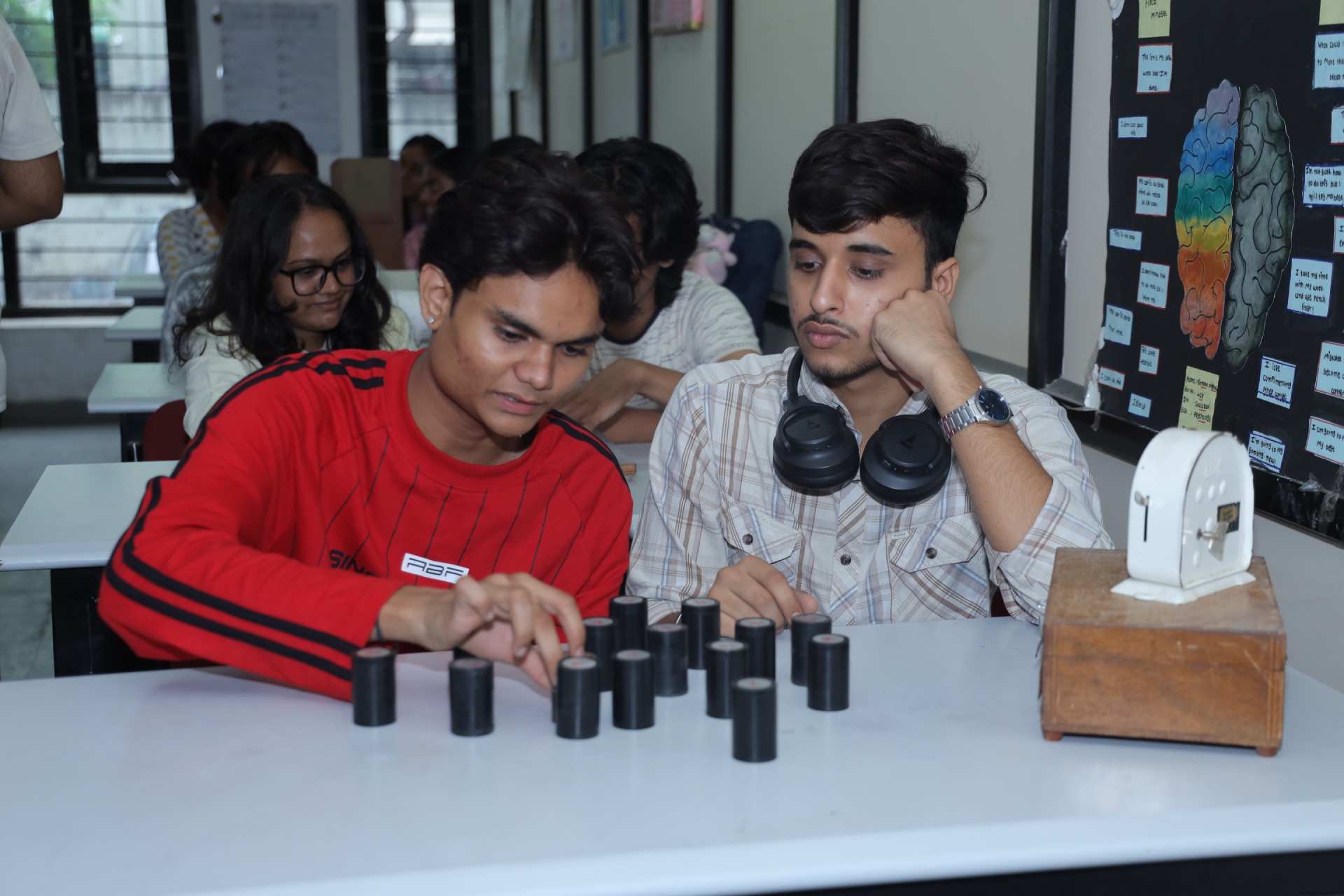

The Computer Department of L. D. Arts College, affiliated with Gujarat University, has been a pioneering center for computer education since its establishment in 1991. Over the years, the department has evolved into a dynamic academic space where innovation, creativity, and technology converge, particularly catering to students from the Arts stream.
Situated within a vibrant academic ecosystem, the department has consistently emphasized the integration of technology with artistic expression, making it uniquely positioned to serve interdisciplinary learning needs. It has played a significant role in introducing multimedia-oriented education, enabling students to explore creative domains such as digital design, graphics, and content development alongside foundational computing skills.
The department fosters a culture that goes beyond conventional classroom teaching. Students are actively encouraged to participate in research activities, internships, collaborative projects, hackathons, and industry engagements, thereby gaining practical exposure and developing real-world competencies. This holistic approach ensures that learners are not only academically proficient but also industry-ready and innovation-driven.
A key strength of the department lies in its commitment to bridging the gap between Arts and Technology. Recognizing the growing importance of digital skills across disciplines, the department offers programs that are:
The department stands out for its interdisciplinary approach, where students engage in projects that combine design, storytelling, and computing, thereby redefining traditional boundaries of education.
The department offers Computer Science as a Minor and Multidisciplinary Course (MDC) under the B.A. (4-Year Undergraduate Program) aligned with NEP 2020 .
Program Overview
The program is thoughtfully designed for Arts students to develop:
The curriculum follows a progressive semester-wise structure (Semester I to VI), starting from foundational concepts and gradually advancing to applied and project-based learning.
Key Features of the Program
The department adopts a student-centric and practice-oriented teaching approach, ensuring quality education through:
This methodology ensures the development of both technical competencies and critical soft skills, enhancing employability and adaptability.
The department is well-equipped to support practical learning and innovation:
These facilities enable students to work on multimedia applications, design tools, and real-time projects in a conducive environment.
The Computer Department consistently strives to enrich the academic environment by organizing guest lectures, expert sessions, and knowledge-sharing interactions with distinguished academicians and industry professionals. These initiatives play a vital role in complementing classroom learning by exposing students to emerging technologies, global academic perspectives, and industry practices.
The department has had the privilege of hosting renowned resource persons from prestigious international institutions and leading organizations, whose insights have significantly contributed to enhancing students’ understanding of contemporary digital trends and professional competencies.
A notable highlight is the expert session delivered by Dr. Bharat Rathod from the University of Massachusetts (UMass), Amherst, USA, on “Learning Management Systems (LMS) in Higher Education”. This session provided students with a global perspective on digital learning ecosystems, modern educational technologies, and the role of LMS platforms in transforming higher education.
Further strengthening industry connect, the department organized a session on “Career Opportunities in Digital Marketing” by Mr. Nitin Jain, Founder of Digihustle, where students were introduced to evolving trends in digital platforms, online branding, and the scope of technology-driven careers.
An insightful expert talk on “Personal Branding” was delivered by Mr. Neeraj Paul, Head – School of Business, Pearl Academy, emphasizing the importance of digital identity, self-presentation, and professional positioning in the modern competitive landscape.
The department also hosted a highly impactful session on “Resume Preparation and Interview Skills” by Mr. Dharmendra Gangwani, Technical Manager – Operations at Google, where students gained practical guidance on industry expectations, technical interview preparation, and career readiness in the IT sector.
These expert interactions significantly contribute to:
|
Program Code
|
Name of the Program Outcome
|
Program Outcomes (POs)
|
|---|---|---|
|
PO1
|
Fundamental Knowledge of Computer Systems
|
Develop a comprehensive understanding of computer systems, operating systems, and application software, enabling students to effectively use digital tools in academic and professional environments.
|
|
PO2
|
Analytical and Problem-Solving Skills
|
Apply logical reasoning and analytical thinking to solve problems using appropriate computing tools such as spreadsheets, databases, and web technologies.
|
|
PO3
|
Digital Communication and Presentation Skills
|
Exhibit effective communication and presentation skills using digital platforms, office tools, and multimedia applications for academic and professional purposes.
|
|
PO4
|
Web and Internet Technology Skills
|
Understand and apply internet technologies, networking basics, and web design concepts (HTML) to develop simple and functional web-based solutions.
|
|
PO5
|
Multimedia and Creative Design Skills
|
Develop creative abilities using multimedia tools, desktop publishing software, and graphics applications for digital content creation.
|
|
PO6
|
Content Management and E-Learning Skills
|
Demonstrate the ability to create, manage, and publish digital content using Content Management Systems (CMS) and e-learning platforms such as WordPress.
|
|
PO7
|
Database Management Skills
|
Apply database concepts and tools to organize, store, retrieve, and manage structured data efficiently using systems like MS Access.
|
|
PO8
|
Cyber Ethics and Legal Awareness
|
Understand cyber laws, ethical practices, and digital responsibilities to ensure safe and responsible use of technology.
|
|
PO9
|
Employability and Practical Skills
|
Develop practical competencies, teamwork, adaptability, and technical skills required for employment in digital, administrative, and creative industries.
|
|
PO10
|
Lifelong Learning and Interdisciplinary Approach
|
Foster continuous learning, adaptability to emerging technologies, and integration of computing knowledge with arts and other disciplines.
|
|
Year
|
Semester
|
Course Type (Credits)
|
||||||
|---|---|---|---|---|---|---|---|---|
|
1st Year
|
Sem-I
|
Major-1
(4)
|
Major-2
(4)
|
Minor-1
(4)
|
MDC-1
(4)
|
AEC-1
(2)
|
SEC-1
(2)
|
IKS-1
(2)
|
|
Sem-II
|
Major-3
(4)
|
Major-4
(4)
|
Minor-2
(4)
|
MDC-2
(4)
|
AEC-2
(2)
|
SEC-2
(2)
|
VAC-
1
(2)
|
|
|
2 nd Year
|
Sem-III
|
Major-5
(4)
|
Major-6
(4)
|
Major-7
(4)
|
MDC-3
(4)
|
AEC-3
(2)
|
SEC-3
(2)
|
IKS-2
(2)
|
|
Sem-IV
|
Major-8
(4)
|
Major-9
(4)
|
Major-10
(4)
|
Minor-3
(4)
|
AEC-4
(2)
|
SEC-4
(2)
|
VAC-
2
(2)
|
|
|
3rd Year
|
Sem-V
|
Major-11
(4)
|
Major-12
(4)
|
Major-13
(4)
|
Minor-4
(4)
|
Minor-5
(4)
|
SEC-5
(2)
|
-
|
|
Sem-VI
|
Major-14
(4)
|
Major-15
(4)
|
Major-16
(4)
|
Minor-6
(4)
|
AEC-5
(2)
|
Internship
(4)
|
-
|
|
|
4th Year
|
Sem-VII
|
Major-17
(4)
|
Major-18
(4)
|
Major-19
(4)
|
Minor-7
(4)
|
-
|
OJT/RP-1
(6)
|
-
|
|
Sem-VIII
|
Major-20
(4)
|
Major-21
(4)
|
Major-22
(4)
|
Minor-8
(4)
|
-
|
OJT/RP-2
(6)
|
-
|
|
|
CO Code
|
Course Outcome Title
|
Course Outcomes Description
|
|---|---|---|
|
CO1
|
Understanding Computer Fundamentals
|
Develop knowledge of computer systems, components, operating systems, and basic applications, enabling students to operate digital systems effectively.
|
|
CO2
|
Office Automation and Documentation Skills
|
Apply MS Word, Excel, and PowerPoint tools to create professional documents, presentations, and perform business data processing tasks.
|
|
CO3
|
Digital Communication Skills
|
Demonstrate effective use of email, internet tools, and digital communication platforms for academic and professional interaction.
|
|
CO4
|
Data Analysis and Decision-Making Skills
|
Use spreadsheet tools and data processing techniques to analyze, interpret, and present data for informed decision-making.
|
|
CO5
|
Web Technology and Internet Skills
|
Understand internet technologies and develop basic web pages using HTML for communication and business applications.
|
|
CO6
|
Multimedia and Design Skills
|
Create and design digital content using multimedia tools and desktop publishing software for effective visual communication.
|
|
CO7
|
Content Management and Web Development
|
Develop and manage websites using CMS platforms like WordPress, including content creation and customization.
|
|
CO8
|
Database Management Skills
|
Design and manage databases using tools like MS Access, including tables, queries, forms, and reports.
|
|
CO9
|
Graphics and Creative Design Skills
|
Apply graphic design tools such as Illustrator/CorelDraw to create professional digital designs and media content.
|
|
CO10
|
Ethical, Legal, and Digital Awareness
|
Understand cyber laws, ethics, and responsible use of technology in digital environments.
|
|
CO11
|
Practical and Employability Skills
|
Develop hands-on skills, problem-solving abilities, and professional competencies for real-world applications.
|
|
CO12
|
Interdisciplinary and Lifelong Learning
|
Integrate computing knowledge with arts and other domains while developing adaptability to emerging technologies.
|
| SR NO | Particulars | BA I | BA II | BA III | BA IV | BA V | BA VI | ||||||
|---|---|---|---|---|---|---|---|---|---|---|---|---|---|
| BOY | GIRL | BOY | GIRL | BOY | GIRL | BOY | GIRL | BOY | GIRL | BOY | GIRL | ||
| 1 | Tuition Fee | 600 | - | 600 | - | 600 | - | 600 | - | 600 | - | 600 | - |
| 2 | Exam & Stationery Fee | 100 | 100 | 100 | 100 | 100 | 100 | 100 | 100 | 100 | 100 | 100 | 100 |
| 3 | Library Fee | 25 | 25 | 25 | 25 | 25 | 25 | 25 | 25 | 25 | 25 | 25 | 25 |
| 4 | Gymkhana Fee | 20 | 20 | 20 | 20 | 20 | 20 | 20 | 20 | 20 | 20 | 20 | 20 |
| 5 | Identity Card Fee | 15 | 15 | - | - | 15 | 15 | - | - | 15 | 15 | - | - |
| 6 | Student Welfare Fee | 20 | 20 | 20 | 20 | 20 | 20 | 20 | 20 | 20 | 20 | 20 | 20 |
| 7 | Cultural Activities Fee | 40 | 40 | 40 | 40 | 40 | 40 | 40 | 40 | 40 | 40 | 40 | 40 |
| 8 | Uni.work Book/union | - | - | - | - | - | - | - | - | - | - | - | - |
| 9 | Univ Sports Fee | 10 | 10 | 10 | 10 | 10 | 10 | 10 | 10 | 10 | 10 | 10 | 10 |
| 10 | Admission Fee / E N V Fee | 100 | 100 | 100 | 100 | - | - | - | - | - | - | - | - |
| 11 | Univ.medical Fee | 25 | 25 | - | - | - | - | - | - | - | - | - | - |
| 12 | Univ.enrol/regist.fee | 125 | 125 | - | - | - | - | - | - | - | - | - | - |
| 13 | Examination Fee | 500 | 500 | 500 | 500 | 250 | 250 | 250 | 250 | 250 | 250 | 250 | 250 |
| 14 | W.d.c Fee | 10 | 10 | 10 | 10 | 10 | 10 | 10 | 10 | 10 | 10 | 10 | 10 |
| Total | 1590 | 990 | 1425 | 825 | 1090 | 490 | 1075 | 475 | 1090 | 490 | 1075 | 475 | |