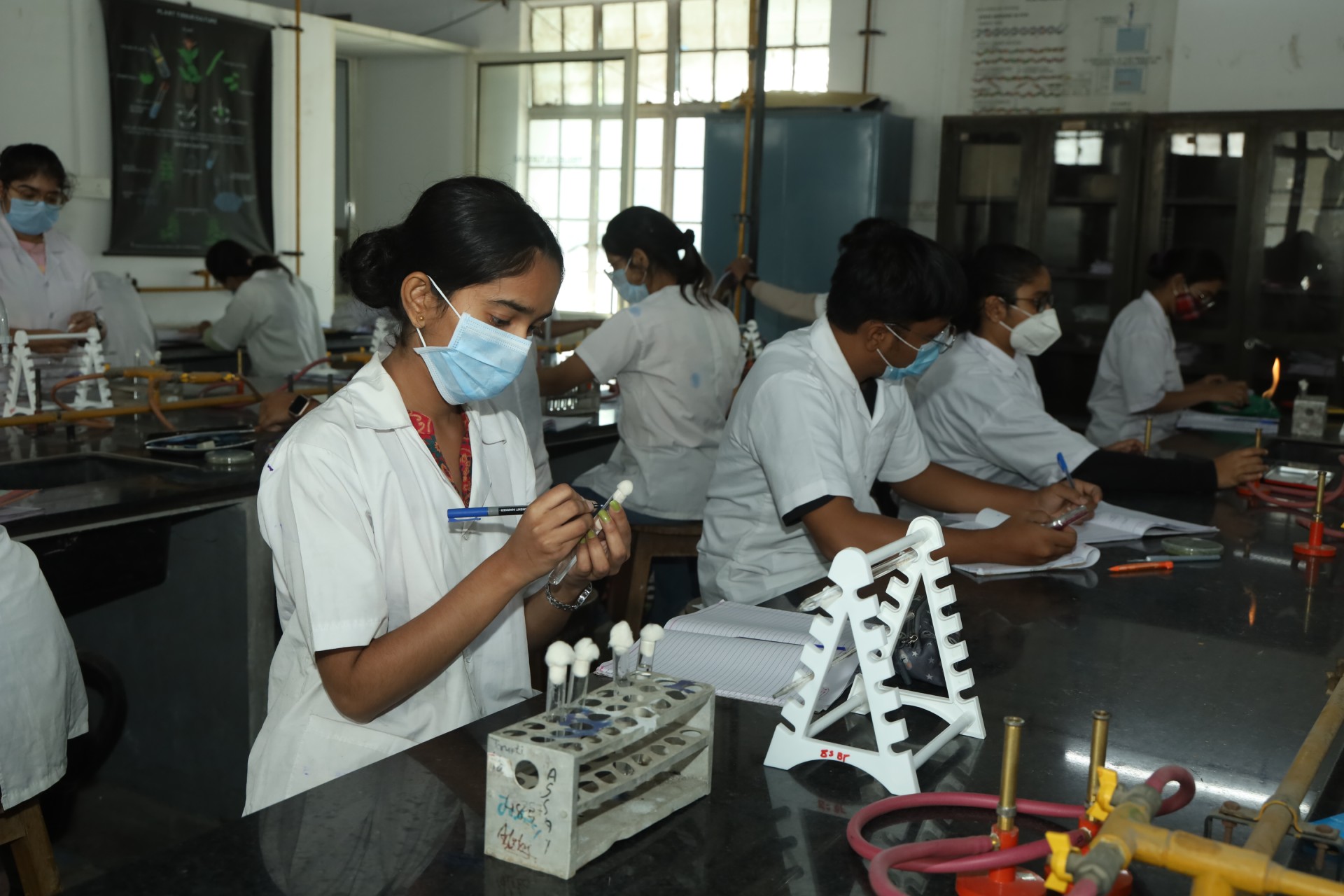

The Department of Psychology, established in 1937 alongside L.D. Arts College, carries a distinguished legacy of over nine decades. Since its inception, it has grown into one of the most dynamic and intellectually vibrant centres of the institution, recognized for its dedication to academic excellence, scientific inquiry, and the holistic development of students.
Over the years, the department has played a pivotal role in shaping generations of learners by fostering a deep understanding of human behaviour, mental processes, and psychological well-being. It places strong emphasis on nurturing critical thinking, research aptitude, emotional intelligence, and a sense of social responsibility among students.
Founded with the vision of advancing psychology as both a scientific discipline and a tool for understanding individuals and society, the department began its journey with committed faculty and enthusiastic learners. Today, it stands as a thriving academic space known for its scholarly contributions, innovative teaching practices, and a balanced focus on theoretical and applied psychology.
A key strength of the department lies in its dedicated and highly qualified faculty, who inspire students through their passion for teaching, research, and professional practice. The teaching-learning environment encourages interaction, critical reflection, and experiential learning, enabling students to connect theoretical concepts with real-life situations.
The department has consistently maintained an excellent academic record, with students securing university ranks and distinctions. Its alumni have successfully pursued careers as psychologists, counsellors, academicians, researchers, human resource professionals, and practitioners across diverse fields, reflecting the strong academic and ethical grounding imparted by the department.
To enhance learning beyond the classroom, the department regularly organizes seminars, workshops, guest lectures, counselling awareness programmes, field visits, and research-oriented activities. These initiatives equip students with practical skills, professional competence, and a deeper appreciation of psychological applications in everyday life.
Research and scientific inquiry are integral to the department’s ethos. Faculty members actively contribute through publications, conferences, and research projects, while students are encouraged to engage in research work, case studies, and field-based learning experiences.
The department also plays a significant role in promoting the social and emotional well-being of the college community through mental health awareness programmes, counselling initiatives, and life skills education. It enables students to appreciate diverse human experiences across different developmental stages, cultures, and social contexts.
As it moves forward, the Department of Psychology continues to honour its rich legacy while embracing modern pedagogical approaches, digital innovations, and interdisciplinary perspectives. With a firm belief in the transformative power of psychological knowledge, it remains committed to nurturing reflective thinkers, compassionate individuals, and responsible global citizens.
Thus, the Department of Psychology stands not merely as a centre of academic learning, but as a space where the scientific understanding of human behaviour and mental processes is meaningfully integrated with real-world applications across personal, professional, and community contexts.
|
Program Code
|
Name of the Program Outcome
|
Program Outcomes
|
|---|---|---|
|
PO1
|
Foundation of Psychological Knowledge
|
Develop foundational knowledge of psychological concepts, theories, and processes related to human behavior and mental functioning.
|
|
PO2
|
Understanding Human Development
|
Build understanding of developmental processes across the lifespan, including biological, cognitive, emotional, and social dimensions.
|
|
PO3
|
Research and Scientific Inquiry Skills
|
Equip students with basic research skills, scientific thinking, and the ability to apply psychological methods
|
|
PO4
|
Critical Thinking and Analytical Ability
|
Foster critical thinking, analytical abilities, and evaluation of psychological theories and real-life situations.
|
|
PO5
|
Application of Psychology in Real Life
|
Enhance application of psychological principles in everyday life, education, health, and social contexts.
|
|
PO6
|
Mental Health and Well-being Awareness
|
Promote awareness of mental health, well-being, and adaptive coping strategies.
|
|
PO7
|
Ethical and Social Sensitivity
|
Encourage ethical understanding and sensitivity towards individual differences and socio-cultural diversity.
|
|
PO8
|
Problem-Solving and Decision-Making Skills
|
Develop the ability to integrate psychological knowledge for problem-solving and decision-making in personal and professional domains.
|
|
Year
|
Semester
|
Course Type (Credits)
|
||||||
|---|---|---|---|---|---|---|---|---|
|
1st Year
|
Sem-I
|
Major-1
(4)
|
Major-2
(4)
|
Minor-1
(4)
|
MDC-1
(4)
|
AEC-1
(2)
|
SEC-1
(2)
|
IKS-1
(2)
|
|
Sem-II
|
Major-3
(4)
|
Major-4
(4)
|
Minor-2
(4)
|
MDC-2
(4)
|
AEC-2
(2)
|
SEC-2
(2)
|
VAC-
1
(2)
|
|
|
2 nd Year
|
Sem-III
|
Major-5
(4)
|
Major-6
(4)
|
Major-7
(4)
|
MDC-3
(4)
|
AEC-3
(2)
|
SEC-3
(2)
|
IKS-2
(2)
|
|
Sem-IV
|
Major-8
(4)
|
Major-9
(4)
|
Major-10
(4)
|
Minor-3
(4)
|
AEC-4
(2)
|
SEC-4
(2)
|
VAC-
2
(2)
|
|
|
3rd Year
|
Sem-V
|
Major-11
(4)
|
Major-12
(4)
|
Major-13
(4)
|
Minor-4
(4)
|
Minor-5
(4)
|
SEC-5
(2)
|
-
|
|
Sem-VI
|
Major-14
(4)
|
Major-15
(4)
|
Major-16
(4)
|
Minor-6
(4)
|
AEC-5
(2)
|
Internship
(4)
|
-
|
|
|
4th Year
|
Sem-VII
|
Major-17
(4)
|
Major-18
(4)
|
Major-19
(4)
|
Minor-7
(4)
|
-
|
OJT/RP-1
(6)
|
-
|
|
Sem-VIII
|
Major-20
(4)
|
Major-21
(4)
|
Major-22
(4)
|
Minor-8
(4)
|
-
|
OJT/RP-2
(6)
|
-
|
|
|
Program Code
|
Name of the Program Outcome
|
Program Outcomes
|
|---|---|---|
|
CO1
|
Knowledge of Basic Psychological Concepts
|
Explain fundamental concepts, definitions, principles, and key theories related to basic psychological processes.
|
|
CO2
|
Behaviour Analysis
|
Explain and analyze human behaviour and mental processes in everyday contexts.
|
|
CO3
|
Research Awareness
|
Understand basic research methods and scientific approaches in psychology.
|
|
CO4
|
Application Skills
|
Apply psychological principles to real-life situations such as learning, motivation, and emotion.
|
|
CO5
|
Knowledge of biological bases of behavior
|
Explain major psychological perspectives, biological bases of behaviour, developmental stages, and cognitive processes including memory, thinking, and emotion.
|
|
CO6
|
Communication Skills
|
Express psychological ideas effectively through discussions, presentations, and written work.
|
| SR NO | PARTICULARS | BS I | BS II | BS III | BS IV | ||||
|---|---|---|---|---|---|---|---|---|---|
| PSY | PS | PSY | PS | PSY | PS | PSY | PS | ||
| 1 | TUITION FEE | 22000 | 22000 | 22000 | 22000 | 22000 | 22000 | 22000 | 22000 |
| 2 | LAB FEE | 5000 | 5000 | 5000 | 5000 | ||||
| 3 | EXAM & STATIONERY FEE | 2000 | 2000 | 2000 | 2000 | 2000 | 2000 | 2000 | 2000 |
| 4 | MISC FEE | 1000 | 1000 | 1000 | 1000 | 1000 | 1000 | 1000 | 1000 |
| 5 | ADMISSION FORM FEE | 200 | 200 | 200 | 200 | 200 | 200 | 200 | 200 |
| TOTAL | 30200 | 25200 | 30200 | 25200 | 30200 | 25200 | 30200 | 25200 | |